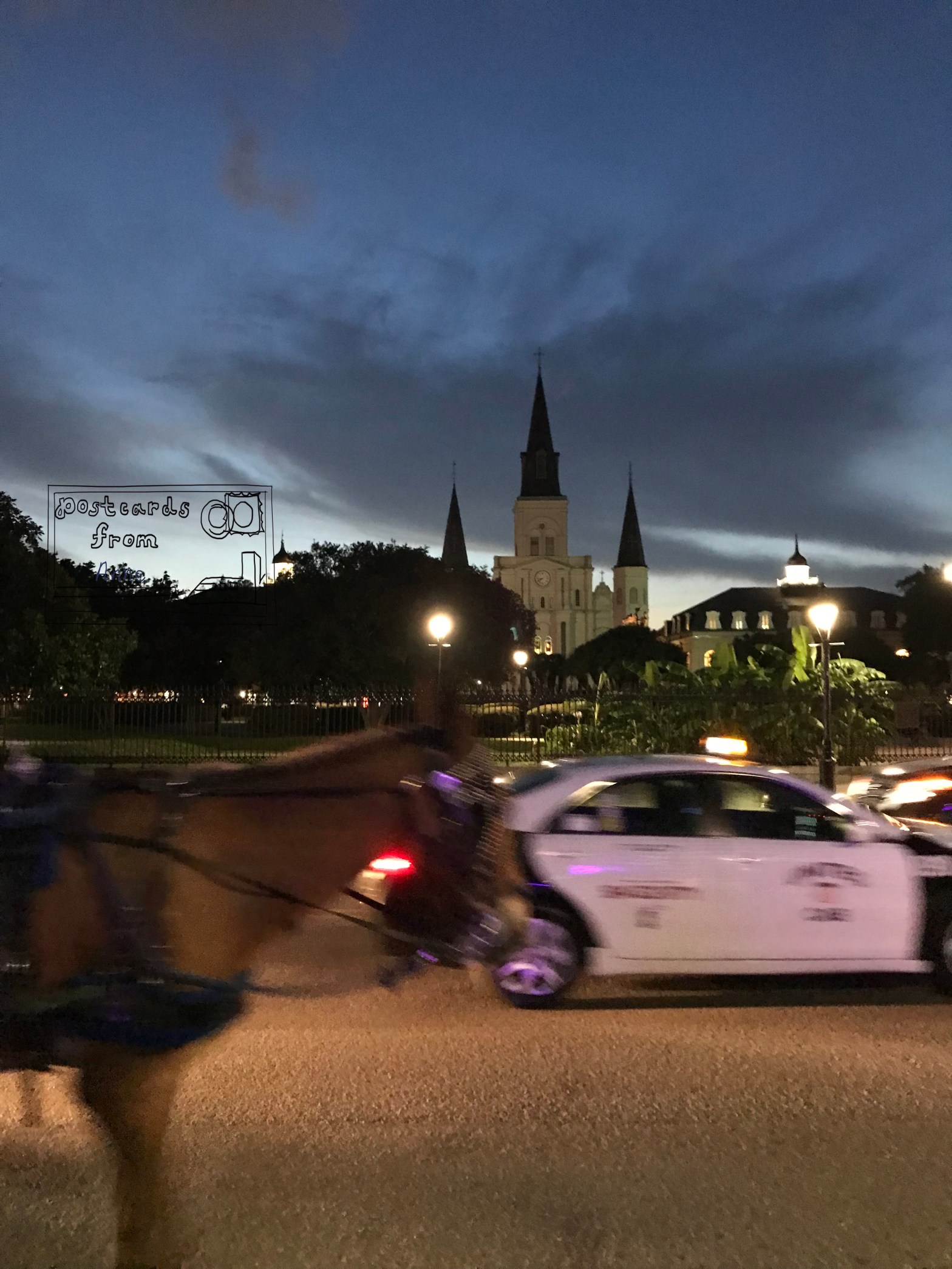
NEW ORLEANS – The heat from the summer was just barely being introduced to these swampy marshlands. Just outside of New Orleans, the bus winded its way into the town. For the most part, it appeared that the morning air was still and not yet quantified. Folks who got on and off the bus in these waylaid stations all seemed to know each other, nodding their heads to their driver and passengers. Others were marked by their luggage as out-of-towners. Those kind of people were the ones who were caught unprepared by the sudden onslaught of rains in the daytime. The rain here did not bring reprieve from the heat. Instead, it only exacerbated the situation with the common dampness it left hanging.
The stand at Lee’s Circle stood bare. Nearby, The National World War II Museum stood. Airplanes from wars past hung from the hanger, and some sat on the ground floor many hundreds of feet below, where steps allowed visitors to gingerly climb up and stare into the cramped quarters some gave their lives in.
As the streetcar make its way down the slender railing, the man with his box of wares puts away his teabags and stands his chair up, ready to get on. It is packed with folks in New Orleans gear in a high faluttin mood.
Snaking through the alleyways of New Orleans was the only way to get to one’s destination. It was typical, then, to get swept up into a wedding procession, with trumpet and all. On the other side of the high wall was the cemetery that had made its early appearance in 007. At twilight, this cemetery seemed eerie by what could not be seen.
The destination in question was the bookstore, Faulkner House Books, where plant vines dangled from the rooftops. A photograph of Harper Lee hung in the corner of the store, which was not large to begin with. Further downtown, there was the bookstore Crescent City Books, where interesting New Orleans-related topics were being displayed. Across the street was the Domenica, where a whole roasted cauliflower could be had.
The Cafe du Monde is open 24 hours a day. By morning, it is drooping, weary from a whole evening of occupants. The fans rotate slowly as the line winds its way out the patio. The heat is already building up around the Ole Miss; further down, another Cafe du Monde is hidden inside an air-conditioned mall. The powder from their beignets still threatens to choke you if you devour it too quickly. There is the ambience from sitting in the crowded patio, though, the Louisiana Quarter fully in view. People with their wares, their trinkets and artwork, line around the Square. It seems like there are many more eyes watching that you cannot see.
When you look to the West and to the East, all you see is slow-flowing Mississippi water. The metallic edifice that is the Huey P. Long Bridge looms in the distance. Emptying into Lake Pontchartrain, delicious Creole flavored dishes are to be found in almost every other restaurant along the route that the cable cart takes.
Two museums are not to be missed: the New Orleans Museum of Art and the Presbytere. They sit side by side, and house both historical artifacts and modern takes on Hurricane Katrina which ravaged through the city, as well as Mardi Gras culture.
But for the most part, it is walking these streets, and absorbing the sights by cable car, that allows you to amble through the spirit that is New Orleans, LA.
The library stands at the hub, where I got off the bus and now was getting on it going back to the airport. A lady sat down next to me on the bus. We had first began conversing while sitting wayside waiting in the doldrums heat. Her husband had come into town for a chess conference and was for the duration of their trip planted permanently in an airport hotel.
“He could be in any city in the world, for goodness sakes,” she exclaimed.
For herself, she determined that she would explore some of what New Orleans had to offer. She located a bus schedule, and came into the city each morning, only to depart it each afternoon for the hotel.
 postcardsfromanne.com