
GRAND CANYON, ARIZONA – The rock formations have formed over billions of years. Yet the park is celebrating its 100th year anniversary. It is only in the last century that humans have become cognizant in protecting this beauty. A visit to the Grand Canyon can make one feel miniscule in the grand scheme of things.
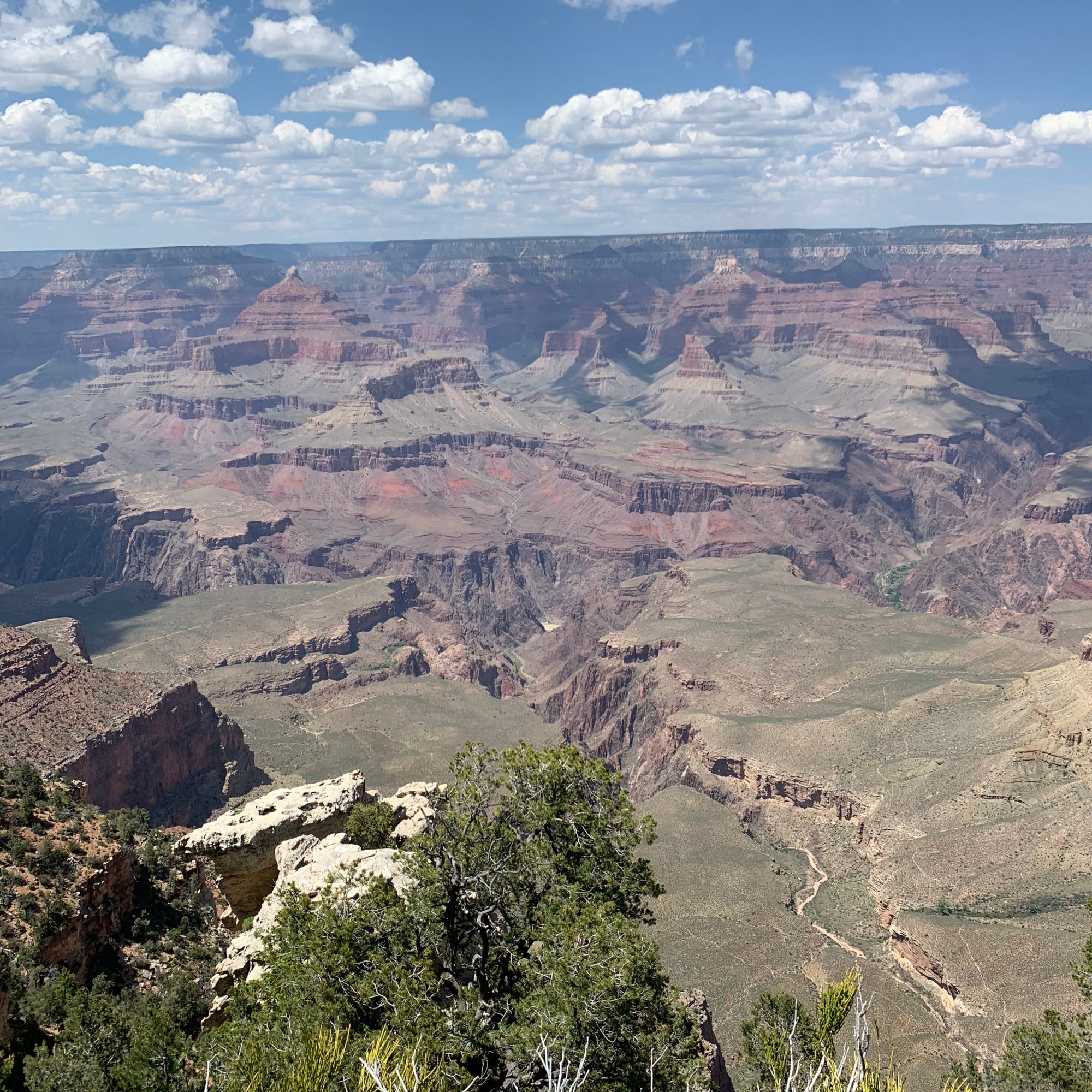
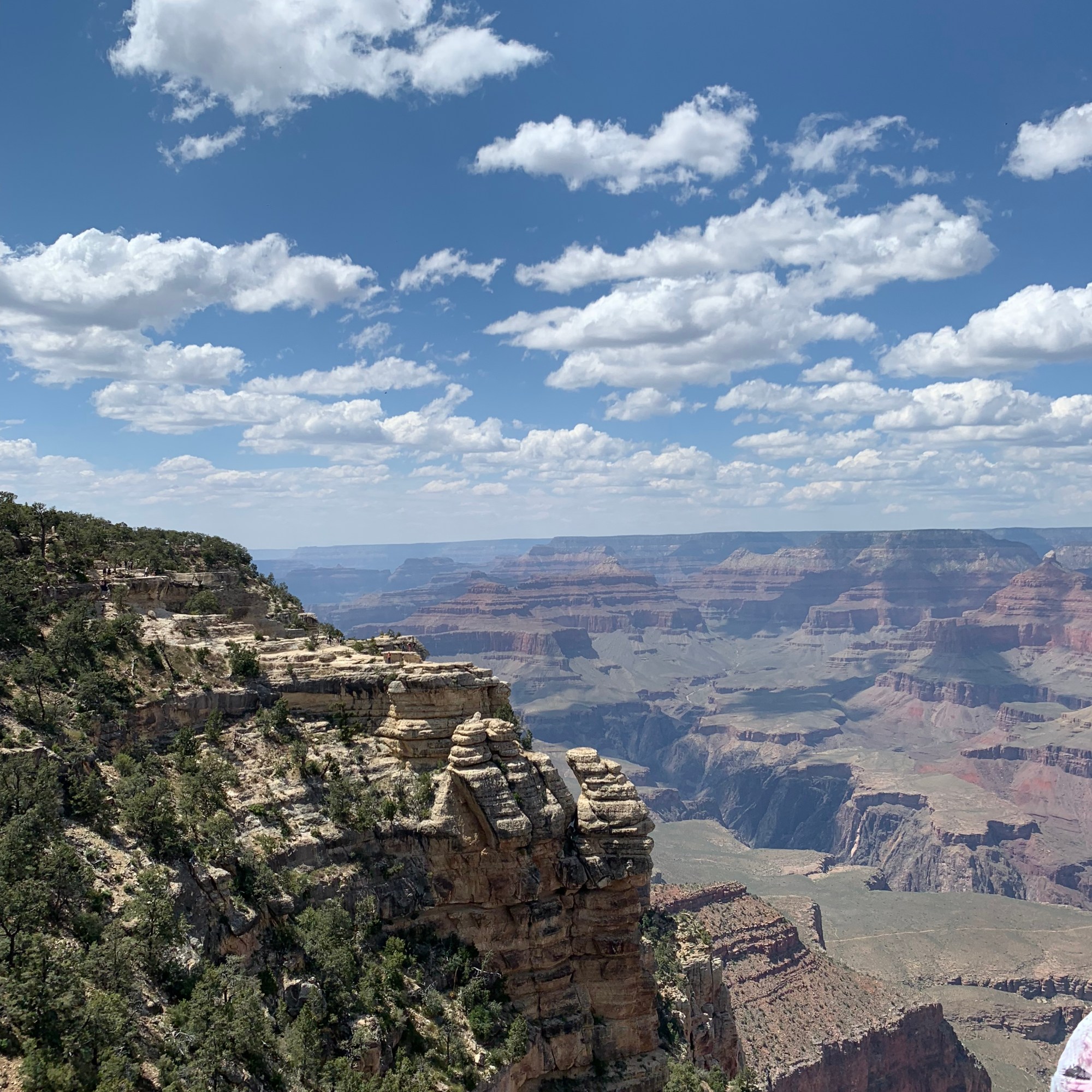
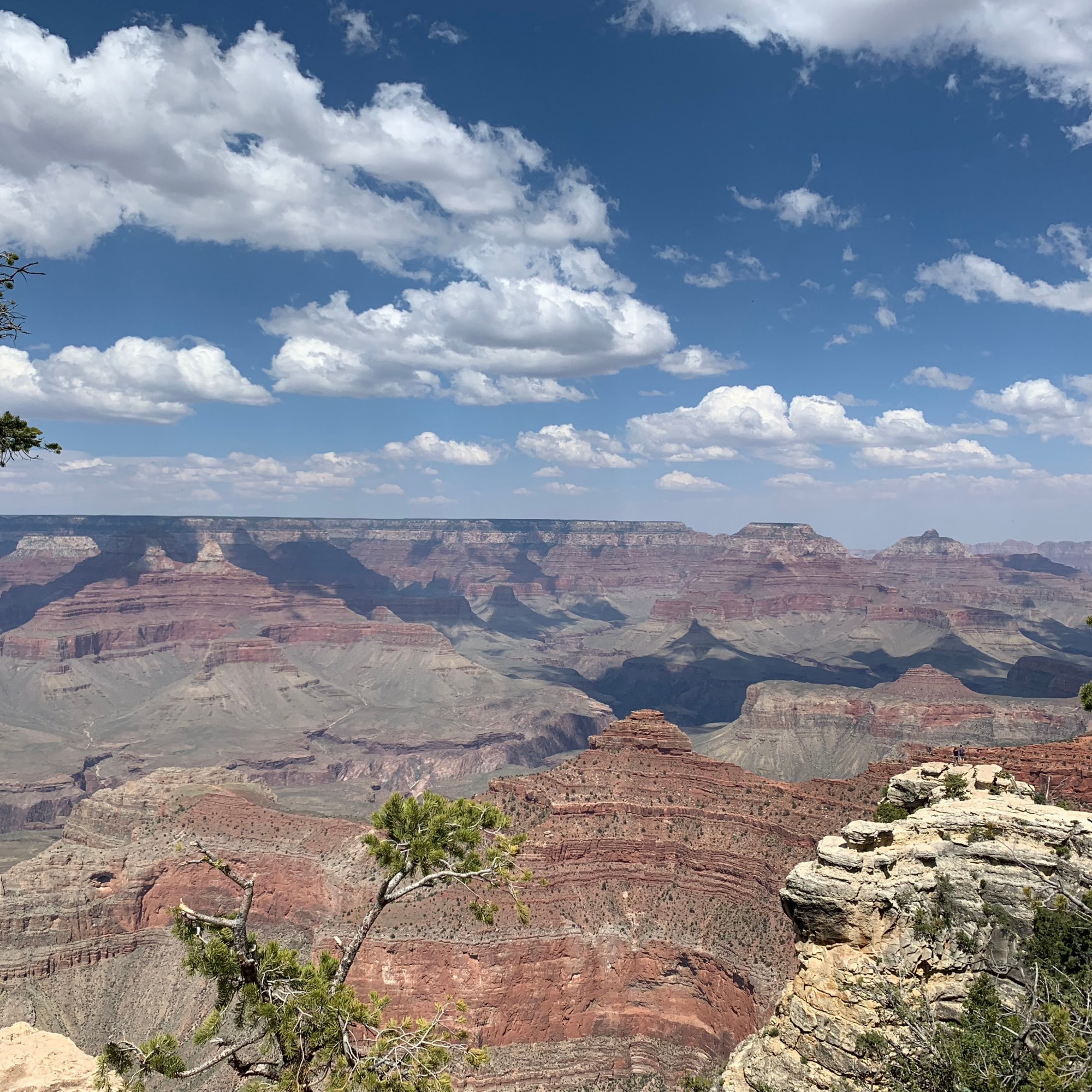
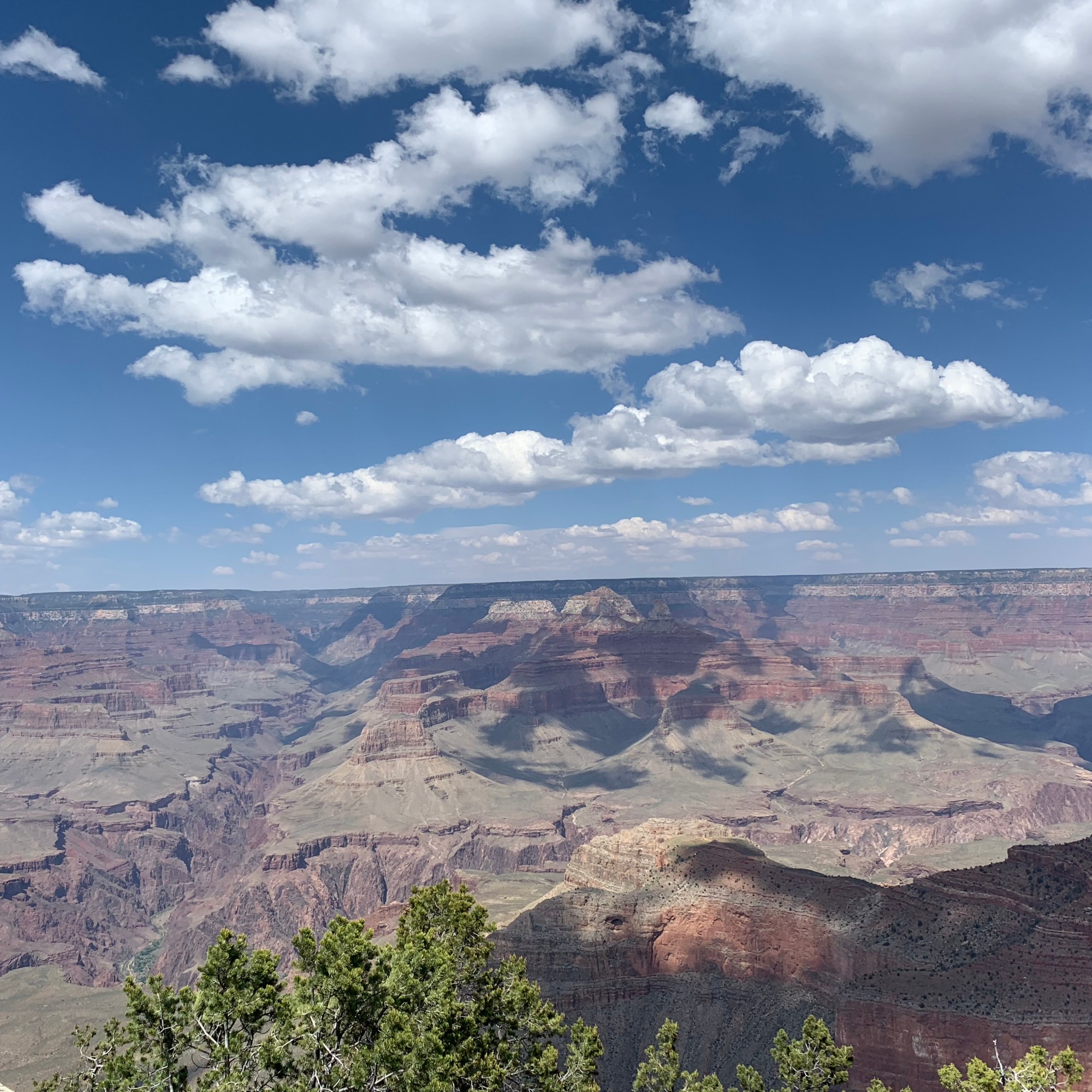
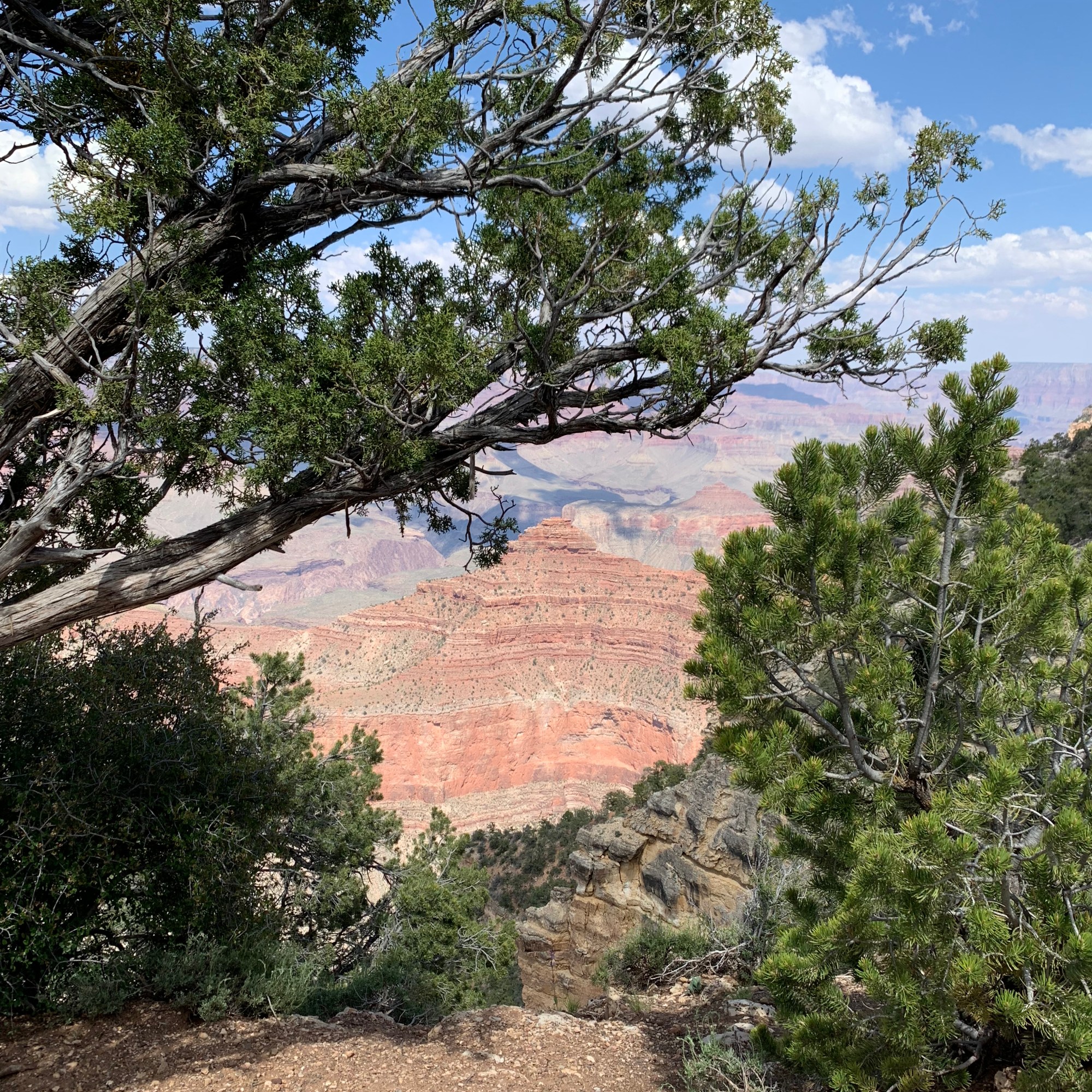
From left to right, top to bottom: a walk along the South Rim of the Grand Canyon
The formations have shifted drastically over the span of time, and it can be witnessed in how these crevices weave and wind. The photos in the above gallery depict an individual’s movement through time and space. In real time, such a journey covers a span of two and a half hours. On an evolutionary time scale, it lasts over two billion years. Such a scale is difficult to grasp from a human’s mind. That it can be seen makes its permanence more prominent. In the specificity of the way that the lines of the mountainous rocks delineate time.
Perspective is so important in establishing our grasp of the moment. Our’s was a bird’s eye view perspective. Our feet were touching the gravel of the mountaintop. We did not scale these mountains, but we were privy to the view. Collectively, it was a kind of delusion, this ever vast landscape carved by the travails of glaciers. Furthermore, our legs were sea-legs, unaccustomed to these mountainous sands. Our legacy– the tourist’s– was that of caution. One false step, for a false reason, and assuredly, a sad end. Those who lived here presumably did not witness such torment.
But with caution comes fearlessness. The calm that settles in when one’s eye has sought out the distance, and relinquished one’s command of the situation. It is impossible to lose oneself completely, but is another to relinquish the reigns to Mother Nature; at the Grand Canyon, one can begin to imagine just such a scenario.
 postcardsfromanne.com