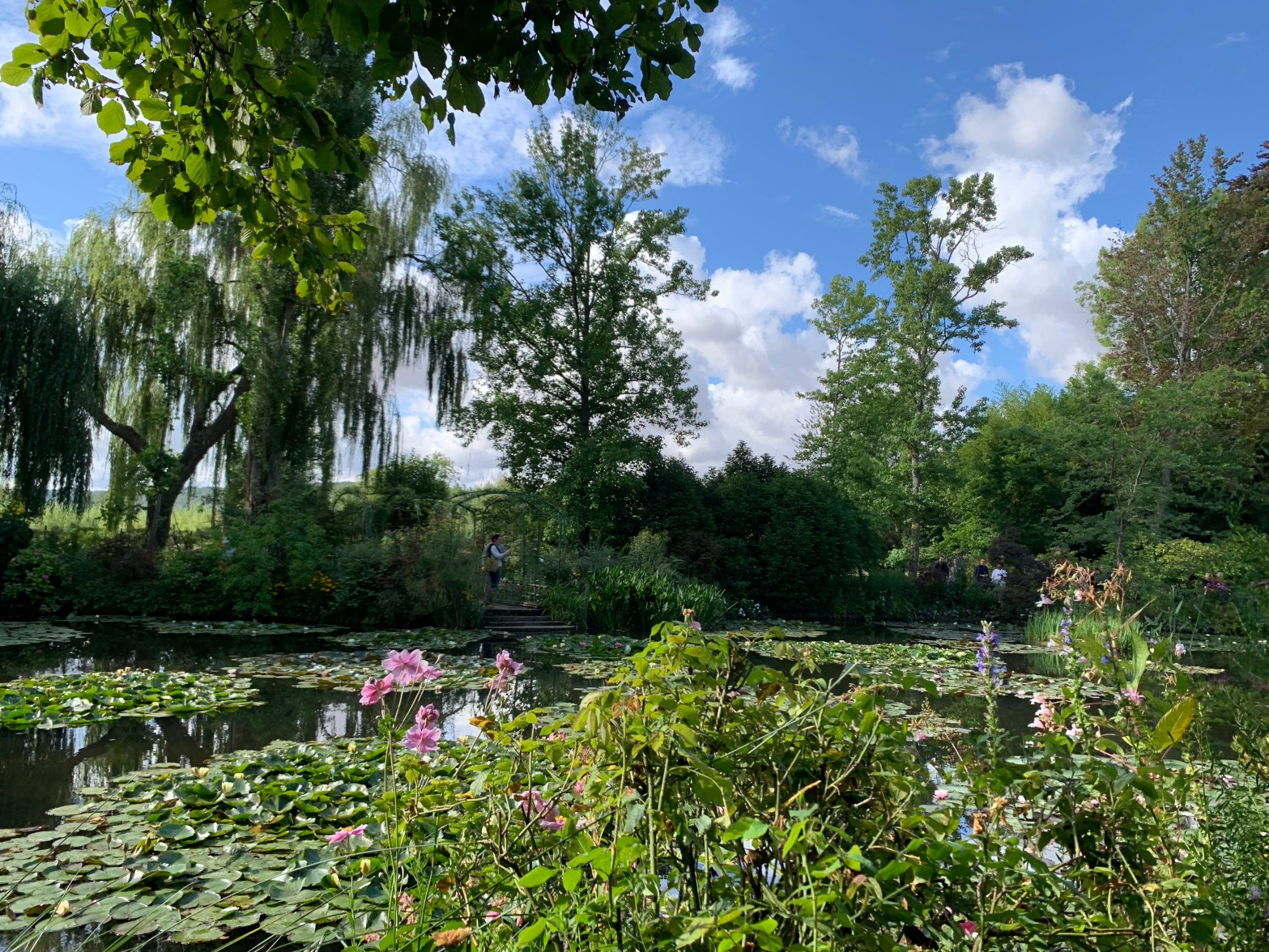
GIVERNY, France – The watercolors blend together like a taut line flush with the world. The fiery light of day bounces off of the river Epte. Nobody tells you of the bamboos that line the path, but I am telling you now.
The people crowd towards the insides, the yellow house, the beating heart. The opened pathways, its veins. The bridge to the other side, its aorta. And spilling out into the lily ponds that are so famous.
This garden existed in Monet’s head before it existed in our hearts. Furthermore, he probably could not coalesce the strength of nature’s design as properly as it has seeped into the natural consciousness. The leaves blend into the flowers wayside. Murmurs can be heard, because visiting a garden is akin to touring an open-aired cathedral. Many come and herald the unseen.
Monet’s taste run alongside the Orient. His sensibilities were greatly influenced by Japanese aesthetics. The firebrand then may not seem like one now. However, from the way the rooms are painted, each a different bright color, it seems that he was unafraid of tonal clashes. Instead, he felt stymied by the creative inducing effects.
Monet’s paintings lie in rest at museums all around the world. Sometimes, they are even loaned to quiet locales. Such discoveries can always elicit a simple squeeze of joy. Where was this painting before it entered mine eyes? After having visited Giverny, witnessing these lily ponds can never exist in the isolation of the museum’s hard linoleum floors. Instead, they rest in the memory of a vibrant summer’s day.
Giverny Book Recommendations:
Monet’s passion : ideas, inspiration and insights from the painter’s garden, by Elizabeth Murray, 1953
The book takes place over one annual cycle, whereby a gardener displays her observations of the equal parts natural and artificial art of Monet’s garden.
 postcardsfromanne.com